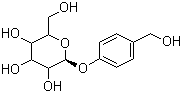
Gastrodin is a naturally occurring phenolic glucoside with the chemical structure 4-hydroxybenzyl alcohol β-D-glucopyranoside. It is one of the principal bioactive constituents extracted from the rhizome of *Gastrodia elata*, a traditional medicinal plant extensively used in East Asian countries. The compound appears as a white to pale yellow crystalline powder, is freely soluble in water, and is known for its neuroprotective, sedative, and anticonvulsant properties.
The isolation of gastrodin dates back to the mid-20th century during investigations of the pharmacologically active ingredients of *Gastrodia elata*, a herb used for centuries in traditional Chinese medicine (TCM) for treating ailments such as headaches, dizziness, epilepsy, and convulsions. The modern identification of gastrodin as a key constituent was achieved through phytochemical analysis and bioassay-guided fractionation. Its structure was elucidated using standard methods such as nuclear magnetic resonance (NMR) and mass spectrometry (MS).
Gastrodin functions as a prodrug of 4-hydroxybenzyl alcohol (HBA), which is considered the pharmacologically active form. Following oral administration, gastrodin is hydrolyzed by intestinal enzymes or absorbed and then metabolized to release HBA, which readily crosses the blood-brain barrier. The compound exerts effects on the central nervous system by modulating GABAergic activity, reducing oxidative stress, and inhibiting inflammatory pathways. These actions contribute to its observed sedative, anti-anxiety, anti-epileptic, and neuroprotective effects in animal and cellular models.
In clinical and preclinical studies, gastrodin has demonstrated efficacy in various neurological conditions. It has been used in the management of epilepsy, migraine, vascular dementia, and post-stroke recovery. It is often included in compound preparations in traditional medicine or administered as a monotherapy in tablet or injectable form in modern formulations approved in some Asian countries. In China, gastrodin injections are approved for use in cerebral ischemia and related disorders.
Mechanistically, gastrodin is known to modulate several targets. It enhances GABA levels in the brain, inhibits NMDA receptor-mediated excitotoxicity, and reduces the expression of inflammatory cytokines such as TNF-α and IL-1β. It also exhibits antioxidant activity by scavenging reactive oxygen species and improving mitochondrial function, which contributes to its protective effects in models of neurodegenerative diseases such as Alzheimer’s and Parkinson’s disease.
Gastrodin has been evaluated for its effects on cognitive function, showing potential benefits in models of memory impairment induced by aging, stress, or chemical insult. It also demonstrates protective effects in models of cerebral ischemia-reperfusion injury by improving cerebral blood flow, reducing infarct size, and attenuating neuronal apoptosis. These findings have supported its continued use and investigation in vascular and degenerative neurological disorders.
In terms of pharmacokinetics, gastrodin is rapidly absorbed following oral or parenteral administration. It is metabolized to 4-hydroxybenzyl alcohol and conjugated metabolites, which are excreted mainly via the kidneys. The half-life of gastrodin and its metabolites varies depending on the formulation and route of administration.
Gastrodin is generally considered to have a favorable safety profile. It has low acute toxicity and is well tolerated in animal models and human clinical use. Mild side effects such as nausea or dizziness have been reported rarely. Nonetheless, as with any neuroactive compound, monitoring is recommended during extended use or in patients with comorbid conditions.
In summary, gastrodin is a phenolic glucoside derived from *Gastrodia elata*, widely used in traditional and modern medicine for its neuroprotective and central nervous system-modulating properties. Through its conversion to 4-hydroxybenzyl alcohol, it exerts antioxidant, anti-inflammatory, and neuroregulatory effects, making it a valuable agent in the treatment of epilepsy, migraine, cognitive impairment, and cerebrovascular disorders.
References
2024. Gastrodin, a Promising Natural Small Molecule for the Treatment of Central Nervous System Disorders, and Its Recent Progress in Synthesis, Pharmacology and Pharmacokinetics. International Journal of Molecular Sciences, 25(17).
DOI: 10.3390/ijms25179540
1981. Studies on the constituents of Gastrodia elata Blume. Chemical and Pharmaceutical Bulletin, 29(1).
DOI: 10.1248/cpb.29.55
|




 GHS07 Warning Details
 chemBlink Chemical Story