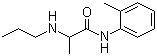
Prilocaine is a local anesthetic of the amino amide type that was first introduced in the 1960s. It was developed as part of the broader effort to produce safer and more effective local anesthetics with reduced systemic toxicity compared to earlier agents such as procaine and lidocaine. Chemically, prilocaine is known as N-(2-methylphenyl)-2-(propylamino)propanamide and is structurally similar to lidocaine, differing by the presence of a propyl group in place of lidocaine’s ethyl group on the amide nitrogen.
The mechanism of action of prilocaine, like other local anesthetics, involves the reversible inhibition of voltage-gated sodium channels in neuronal membranes. This action blocks the initiation and propagation of nerve impulses, thereby producing a localized loss of sensation. Prilocaine is notable for its relatively rapid onset and intermediate duration of action, and it is less vasodilatory than lidocaine, which can prolong its effect without the need for a vasoconstrictor like epinephrine.
One of the most common clinical applications of prilocaine is in regional and infiltration anesthesia. It is widely used in dental procedures, minor surgical interventions, and obstetric anesthesia. Prilocaine is often combined with lidocaine in topical formulations, such as the eutectic mixture of local anesthetics (EMLA), used for dermal anesthesia before venipuncture or minor dermatological procedures.
Although generally well tolerated, prilocaine can cause dose-related adverse effects, particularly methemoglobinemia, a condition in which hemoglobin is oxidized to methemoglobin, reducing its oxygen-carrying capacity. This side effect is primarily associated with high doses or rapid systemic absorption and is more likely to occur in infants or individuals with genetic predispositions. Due to this risk, prilocaine is typically avoided in neonates and patients with glucose-6-phosphate dehydrogenase (G6PD) deficiency or a history of methemoglobinemia.
Pharmacokinetically, prilocaine is metabolized primarily in the liver, but unlike lidocaine, a portion of its metabolism occurs in the kidneys. The principal metabolites include ortho-toluidine, which is associated with the development of methemoglobinemia. Prilocaine has a relatively low systemic toxicity profile due to its rapid clearance and lower lipid solubility compared to some other anesthetics.
In terms of regulatory status, prilocaine is listed in pharmacopeias worldwide and is approved for clinical use in multiple countries. It remains an important component in both topical and injectable anesthetic preparations due to its favorable safety profile when used appropriately and its effective anesthetic properties.
References
1990. Regional variations in analgesic efficacy of EMLA cream. Quantitatively evaluated by argon laser stimulation. Acta Dermato-Venereologica, 70(4).
DOI: 10.2340/0001555570314318
1998. Transient neurologic symptoms after spinal anesthesia: a lower incidence with prilocaine and bupivacaine than with lidocaine. Anesthesiology, 88(3).
DOI: 10.1097/00000542-199803000-00012
2010. Safety of Lidocaine 15% and Prilocaine 5% Topical Ointment Used as Local Anesthesia for Intense Pulsed Light Treatment. Dermatologic Surgery, 36(7).
DOI: 10.1111/j.1524-4725.2010.01597.x
|




 GHS07 Warning Details
 chemBlink Chemical Story