
Online Database of Chemicals from Around the World
| Joylife Nutripharma Inc. | China | |||
|---|---|---|---|---|
 | www.joylifegroup.com | |||
 | +86 15084905292 | |||
 | info@joylifenutripharma.com | |||
| Chemical distributor since 2016 | ||||
| chemBlink Standard supplier since 2026 | ||||
| Classification | Surfactant |
|---|---|
| Name | Soya Lecithin |
| Synonyms | 2-(((9Z,12Z)-octadeca-9,12-dienoyl)oxy)-3-(palmitoyloxy)propyl (2-(trimethylammonio)ethyl) phosphate |
| Molecular Structure | 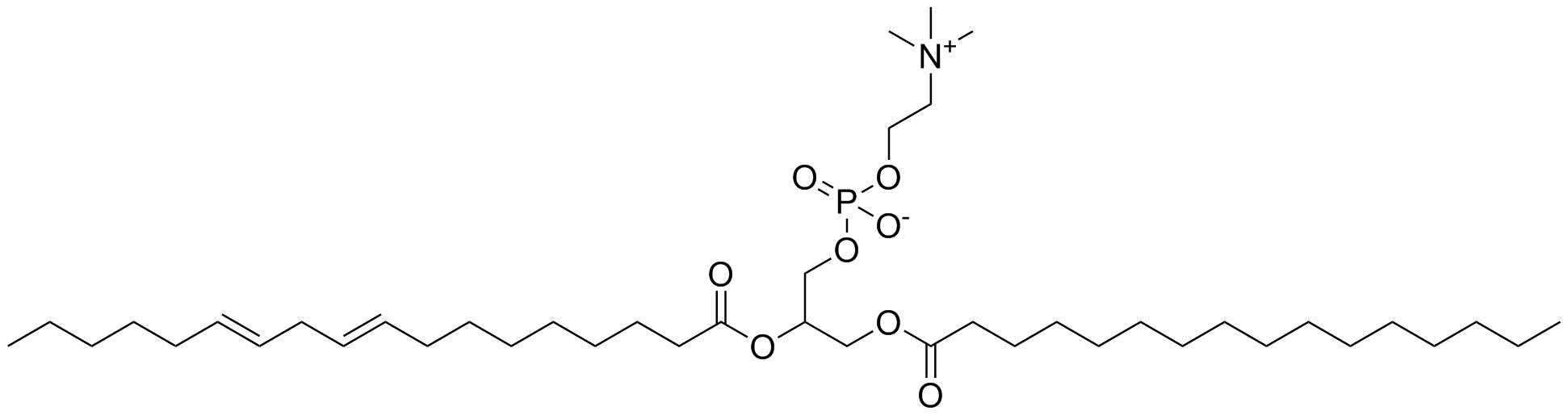 |
| Molecular Formula | C42H80NO8P |
| Molecular Weight | 758.06 |
| CAS Registry Number | 8030-76-0 |
| EC Number | 310-129-7 |
| SMILES | CCCCC/C=C/C/C=C/CCCCCCCC(=O)OC(COC(=O)CCCCCCCCCCCCCCC)COP(=O)([O-])OCC[N+](C)(C)C |
| Hazard Classification | |||||||||
|---|---|---|---|---|---|---|---|---|---|
| |||||||||
 chemBlink Chemical Story
|
Soya lecithin is a natural mixture of phospholipids obtained primarily from soybean (Glycine max) oil during the refining process. Rather than representing a single chemical substance, it consists mainly of phosphatidylcholine, phosphatidylethanolamine, phosphatidylinositol, phosphatidic acid, and related phospholipids, together with small amounts of triglycerides and other naturally occurring lipids. Owing to its unique amphiphilic molecular structure, soya lecithin has become one of the most widely used natural emulsifiers in the world and has played a pivotal role in the development of modern food technology. The scientific history of lecithin began in 1846 when the French chemist and pharmacist Théodore Gobley isolated a phosphorus-containing lipid from egg yolk and named it lecithin, after the Greek lekithos meaning egg yolk. During the following decades, similar phospholipids were found to occur widely in plants and animals, demonstrating that they are fundamental components of biological membranes. This discovery marked one of the earliest milestones in lipid chemistry and laid the groundwork for understanding membrane structure long before the lipid bilayer concept was established. The commercial importance of soya lecithin emerged during the rapid expansion of soybean processing in the early twentieth century. As soybean oil became a major edible oil, manufacturers recognized that the phospholipid-rich "gums" separated during degumming possessed remarkable surface-active properties. Instead of being treated as a by-product, these materials were purified and developed into valuable commercial ingredients. Their ability to stabilize mixtures of oil and water transformed food formulation and established lecithin as one of the first naturally derived industrial emulsifiers. The molecular basis of lecithin's functionality lies in its amphiphilic structure. Each phospholipid molecule contains a hydrophilic phosphate-containing head group and hydrophobic fatty acid chains. This arrangement enables the molecules to accumulate at oil-water interfaces, reduce interfacial tension, and stabilize emulsions. As a result, soya lecithin improves the texture, consistency, and shelf life of products ranging from chocolate and margarine to bakery goods, instant powders, beverages, dressings, and infant formula. In chocolate manufacture, for example, only small amounts of lecithin significantly reduce viscosity, allowing efficient processing while maintaining desirable flow properties. Beyond food applications, soya lecithin has contributed fundamentally to biological research. Because phospholipids are the principal structural components of cell membranes, purified lecithin has been widely employed in studies of membrane organization, liposomes, and drug delivery systems. Artificial lipid vesicles prepared from lecithin have become indispensable experimental models for investigating membrane proteins, transport processes, and interactions between biomolecules and biological membranes. Industrial applications continue to expand. Lecithin is used in pharmaceutical formulations as an emulsifier and dispersing agent, in cosmetics to improve skin feel and product stability, and in animal nutrition to enhance feed performance. Advances in phospholipid fractionation have also enabled the production of phosphatidylcholine-rich and phosphatidylinositol-rich preparations for specialized nutritional and pharmaceutical purposes. In recent decades, increasing demand for clean-label ingredients has further strengthened the position of soya lecithin. Because it is naturally derived and generally recognized as safe, it has become a preferred alternative to many synthetic surfactants in foods and personal care products. At the same time, researchers continue to investigate its applications in nanotechnology, lipid nanoparticles, and advanced drug delivery systems, extending the influence of lecithin well beyond traditional food processing. The history of soya lecithin illustrates how a naturally occurring component of soybean oil evolved from a refining by-product into one of the world's most important functional ingredients. Its amphiphilic molecular architecture not only revolutionized food manufacturing but also contributed to the development of membrane biology, pharmaceutical formulation, and biomaterials science. Few naturally derived materials have exerted such broad and lasting influence across both industry and modern biological research. References 1. Gobley, T. (1850) 'Recherches chimiques sur les jaunes d'œufs', Journal de Pharmacie et de Chimie. (Classic papers describing the discovery of lecithin.) 2. van Nieuwenhuyzen, W. and Szuhaj, B.F. (1998) 'Effects of lecithins and proteins on the stability of emulsions', European Journal of Lipid Science and Technology, 100, pp. 282–291. 3. Gunstone, F.D., Harwood, J.L. and Dijkstra, A.J. (2007) The Lipid Handbook, 3rd ed. CRC Press. |
| Market Analysis Reports |