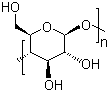
Microcrystalline cellulose (MCC) is a purified, partially depolymerized form of cellulose that is derived from plant sources, most commonly wood pulp or cotton linters. It consists of free-flowing, white, odorless, tasteless, crystalline powder composed of porous particles. As a chemically stable and physiologically inert material, MCC has become a widely used excipient in the pharmaceutical, food, cosmetic, and industrial sectors.
The discovery of microcrystalline cellulose is closely associated with the work of Battista and Smith in the 1950s. They developed a method for producing microcrystalline cellulose by treating α-cellulose with dilute mineral acids under controlled hydrolysis conditions. The process removes the amorphous regions of the cellulose polymer, leaving behind crystalline fragments that can be isolated and purified. The resulting product retains the structural integrity and mechanical strength of natural cellulose, while offering enhanced properties such as compressibility and flowability.
One of the most significant applications of MCC is in the pharmaceutical industry. It is commonly used as a binder, diluent, and disintegrant in tablet and capsule formulations. Its high compressibility enables the direct compression method of tablet production, reducing the need for granulation and simplifying the manufacturing process. MCC promotes uniform mixing of active pharmaceutical ingredients (APIs) with excipients, improves tablet hardness, and aids in rapid disintegration upon ingestion, thereby enhancing drug release and absorption.
MCC is available in various grades, differentiated by particle size, bulk density, and moisture content, to meet specific formulation requirements. It is typically labeled according to its particle size range, such as 101, 102, 200, or 302. These grades are selected based on the desired physical and mechanical properties in tablet manufacturing, such as flow characteristics and compressibility.
In the food industry, MCC is used as a texturizer, stabilizer, bulking agent, and anti-caking agent. Its inclusion improves the consistency and mouthfeel of products such as dairy items, sauces, desserts, and low-fat or reduced-calorie foods. Because MCC is not digested or absorbed in the gastrointestinal tract, it contributes negligible caloric value and is categorized as dietary fiber. It can increase the fiber content of foods without altering flavor or odor.
In cosmetic and personal care products, MCC functions as a viscosity-controlling agent, absorbent, and exfoliant. It is used in creams, lotions, powders, and toothpaste to improve texture, stabilize emulsions, and support moisture control. The compound is non-irritating and biocompatible, making it suitable for topical applications and formulations intended for sensitive skin.
Industrial applications of MCC include its use in the production of paints, adhesives, and filtration aids. In these contexts, MCC enhances viscosity, stability, and structural integrity. It also plays a role in 3D printing filaments, biodegradable composites, and as a reinforcing filler in polymer matrices. Due to its biodegradability and renewable origin, MCC is often explored as a sustainable alternative to synthetic additives.
The safety of MCC has been extensively evaluated, and it is generally recognized as safe (GRAS) by food and drug regulatory authorities. It is considered non-toxic, non-allergenic, and non-carcinogenic. MCC does not undergo significant metabolism in the human body and is excreted unchanged. It has been used in formulations for decades with no reports of adverse health effects when used within recommended limits.
Overall, microcrystalline cellulose is a highly functional and widely accepted excipient derived from natural cellulose. Its favorable physical and chemical properties make it an essential component in pharmaceutical, food, cosmetic, and industrial formulations. Its inert nature, safety profile, and sustainability further contribute to its widespread adoption across multiple sectors.
References
1979. Effects of a high fiber bread diet on weight loss in college-age males. The American Journal of Clinical Nutrition, 32(8), 1703-1709.
DOI: 10.1093/ajcn/32.8.1703
1957. Die primären Pflanzenstoffe. Die Chemie der Pflanzenzellwand.
DOI: 10.1007/978-3-642-92697-6_4
1979. The effect of dietary fiber on the induction of colorectal tumors and fecal beta-glucuronidase activity in the rat. Cancer Research, 39(9), 3752-3756.
URL: https://pubmed.ncbi.nlm.nih.gov/476699
|




 GHS07 Warning Details
 chemBlink Chemical Story