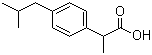
In the 1950s, researchers at The Boots Company in England were searching for a new anti-inflammatory medicine that could relieve the pain of rheumatoid arthritis while causing fewer stomach problems than existing treatments. After testing hundreds of compounds, they discovered ibuprofen.
Approved in the UK in 1969, ibuprofen soon became one of the world's most widely used medicines for pain, fever, and inflammation. A few years later, scientists discovered why it works: it temporarily blocks enzymes known as COX-1 and COX-2, reducing the production of prostaglandins, the natural compounds involved in pain, inflammation, and fever. This breakthrough transformed our understanding of an entire class of medicines known as NSAIDs.

Global Chemical Database