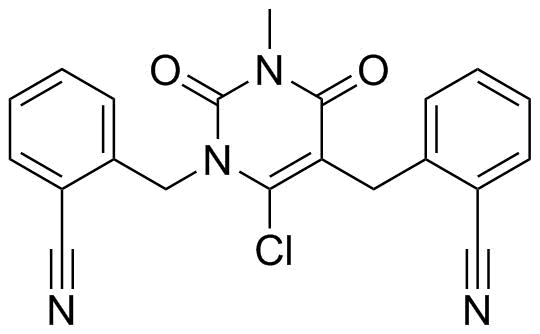
Why would chemists deliberately make a pharmaceutical impurity?
Alogliptin Impurity 43 explains why. An established alogliptin route installs one 2-cyanobenzyl group on a methyluracil-derived intermediate. This impurity contains two—like a chemical fingerprint of an alternative alkylation pathway.
Researchers deliberately prepared it using excess 2-cyanobenzyl bromide, then characterized it and used it as a reference substance for HPLC analysis.
That's the paradox of impurity chemistry: the molecule is unwanted in the medicine, but valuable in the laboratory. By making the impurity intentionally, chemists can learn how to detect it, measure it, understand how it forms, and improve the manufacturing process so that less of it is produced.

Global Chemical Database