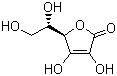
L(+)-Ascorbic acid
CAS 50-81-7
Vitamin C emerged from the centuries-old problem of scurvy and became a landmark achievement in nutrition, structural chemistry, and synthesis.
L(+)-Ascorbic acid (CAS 50-81-7) illustrates how molecular structure determines chemical role. L(+)-Ascorbic acid is vitamin C, a six-carbon water-soluble vitamin whose history links scurvy, nutritional science, structural chemistry, and industrial synthesis. Albert Szent-Gyorgyi isolated 'hexuronic acid' from biological materials in the late 1920s; work by Svirbely, Szent-Gyorgyi, King, and others established its identity with the antiscorbutic factor in 1932. Norman Haworth and collaborators established its constitution in 1933, and the name ascorbic acid reflected its action against scurvy. Humans cannot synthesize sufficient vitamin C and must obtain it from diet. Chemically, its enediol system is readily oxidized, making ascorbate an important reducing agent. Biologically, vitamin C is also an enzyme cofactor, including in collagen hydroxylation. Industrial synthesis historically followed the Reichstein process and later fermentation-based improvements.
Published:
2026-10-01