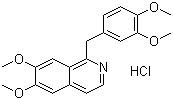
Papaverine hydrochloride (CAS 61-25-6) has a chemical story that connects molecular identity with practical chemistry. Papaverine hydrochloride is the hydrochloride salt of papaverine, a benzylisoquinoline alkaloid historically isolated from opium but pharmacologically unlike morphine and classical opioid alkaloids. NCI describes it as a direct-acting smooth-muscle relaxant that can also be produced synthetically. Its action is not mediated by opioid receptors; nonselective phosphodiesterase inhibition and direct effects on calcium handling have been implicated. These effects relax vascular and other smooth muscle. The hydrochloride supplies a defined pharmaceutical form of the basic alkaloid. Papaverine has been used as a vasodilator and smooth-muscle relaxant and in intracavernosal therapy for erectile dysfunction.
The exact registered form matters because related salts, stereoisomers, metabolites, intermediates or finished medicines can occupy very different roles even when their names look nearly interchangeable.
Its history also shows why synthesis and analysis belong together: chemists must make the intended structure, verify what they made, control related species and connect each material to a documented application.

Global Chemical Database