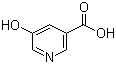
5-Hydroxynicotinic acid, also known as 5-hydroxy-2-pyridinecarboxylic acid, is a chemical compound that belongs to the class of pyridinecarboxylic acids. It has the molecular formula C6H5NO3 and consists of a pyridine ring with a carboxyl group (-COOH) at the 2-position and a hydroxyl group (-OH) at the 5-position.
The discovery of 5-hydroxynicotinic acid is closely linked to the broader research into pyridine derivatives, which have been extensively studied due to their significant biological and chemical properties. Pyridine and its derivatives are widely used in various fields, including medicinal chemistry, agrochemicals, and materials science. The specific synthesis of 5-hydroxynicotinic acid involves known organic chemistry techniques, often starting from nicotinic acid and modifying the structure through hydroxylation.
5-Hydroxynicotinic acid has found various applications in both industrial and research settings. One of its primary uses is in the synthesis of biologically active compounds. As a precursor, it has been employed in the production of pharmaceuticals, particularly those related to the treatment of diseases such as cancer, neurological disorders, and infectious diseases. The presence of both a carboxyl group and a hydroxyl group on the pyridine ring provides functional versatility, enabling further chemical modifications that can lead to more complex therapeutic agents.
In addition to its use in drug development, 5-hydroxynicotinic acid has been studied for its potential as a chelating agent. The compound's ability to form stable complexes with metal ions makes it valuable in applications where metal coordination is required. These complexes can be used in various fields, such as in catalysis, environmental remediation, and the creation of metal-based drugs.
The compound has also been investigated for its role in the synthesis of materials with specific electronic and optical properties. 5-Hydroxynicotinic acid can be used as a ligand in coordination chemistry, where it forms metal-ligand complexes that can be applied in the development of sensors, catalysts, and other advanced materials. Additionally, its ability to interact with other molecules makes it useful in the design of molecular sensors for detecting metal ions and other chemical species.
In analytical chemistry, 5-hydroxynicotinic acid is used as a reference compound in methods such as high-performance liquid chromatography (HPLC). Its well-defined structure and chemical properties allow it to serve as a standard in the analysis of related compounds. It is also utilized in the preparation of buffers and reagents for various laboratory processes.
From an industrial perspective, 5-hydroxynicotinic acid can be applied in the production of agrochemicals, particularly as a precursor to herbicides and fungicides. Its pyridine structure confers a degree of biological activity, which can be further modified to produce compounds with specific pesticidal properties. Moreover, its involvement in the synthesis of other organic molecules makes it a useful intermediate in the production of a range of chemical products.
5-Hydroxynicotinic acid is commercially available and is used primarily in academic and industrial research. It is often handled in laboratories for the synthesis of more complex pyridine derivatives, and it is typically purchased from chemical suppliers specializing in high-quality organic compounds. The compound is stable under standard laboratory conditions and can be easily handled, though care must be taken in its use as it can exhibit acidic properties.
The applications of 5-hydroxynicotinic acid reflect its versatility and importance in various scientific and industrial disciplines. Its role as a precursor in the synthesis of biologically active molecules, its ability to form stable metal complexes, and its use in the preparation of analytical reagents make it a valuable compound across a range of sectors, from pharmaceuticals and materials science to environmental and agricultural applications. Through these established uses, 5-hydroxynicotinic acid continues to contribute significantly to the advancement of chemical and biological research.
References
2024. Design, synthesis, and structure-activity relationship study of novel plinabulin derivatives as anti-tumor agents based on the co-crystal structure. Molecular Diversity, 28(5).
DOI: 10.1007/s11030-024-10835-7
2019. A New Synthesis of Calcium N-(5-Hydroxynicotinoyl)-L-glutamate and Its X-ray Diffraction Structure. Russian Journal of Organic Chemistry, 55(5).
DOI: 10.1134/s1070428019050063
2017. Role of the Tyr270 residue in 2-methyl-3-hydroxypyridine-5-carboxylic acid oxygenase from Mesorhizobium loti. Journal of Bioscience and Bioengineering, 123(2).
DOI: 10.1016/j.jbiosc.2016.07.022
|




 GHS07 Warning Details
 chemBlink Chemical Story