
Online Database of Chemicals from Around the World
| Tropical Biotek Ingredients | Indonesia | |||
|---|---|---|---|---|
 | www.tropicalbiotek.com | |||
 | +62 81234561994 | |||
 | info@tropicalbiotek.com | |||
| Chemical distributor since 2020 | ||||
| chemBlink Standard supplier since 2026 | ||||
| Classification | Chemical reagent >> Organic reagent >> Olefins (cyclic and non-cyclic) |
|---|---|
| Name | (±)-Limonene |
| Molecular Structure | 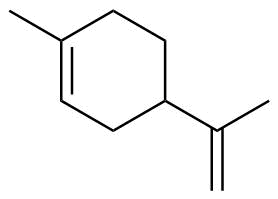 |
| Molecular Formula | C10H16 |
| Molecular Weight | 136.23 |
| CAS Registry Number | 68647-72-3 |
| EC Number | 614-678-6 |
| SMILES | C=C(C)C1CC=C(C)CC1 |
| Density | 0.8±0.1 g/cm3 Calc.*, 0.85 g/mL (Expl.) |
|---|---|
| Melting point | -74.3 °C (Expl.) |
| Boiling point | 175.4±20.0 °C 760 mmHg (Calc.)*, 170 - 180 °C (Expl.) |
| Flash point | 42.8 °C (Calc.)*, 46 °C (Expl.) |
| Index of refraction | 1.468 (Calc.)*, 1.473 (Expl.) |
| * | Calculated using Advanced Chemistry Development (ACD/Labs) Software. |
| Hazard Classification | |||||||||||||||||||||||||||||||||||||||||||||
|---|---|---|---|---|---|---|---|---|---|---|---|---|---|---|---|---|---|---|---|---|---|---|---|---|---|---|---|---|---|---|---|---|---|---|---|---|---|---|---|---|---|---|---|---|---|
| |||||||||||||||||||||||||||||||||||||||||||||
 chemBlink Chemical Story
|
(±)-Limonene is a naturally occurring monocyclic monoterpene hydrocarbon belonging to the class of isoprenoids. It consists of a six-membered cyclohexene ring bearing a methyl substituent and an isopropenyl side chain, giving the molecular formula C10H16. The designation (±) indicates that the compound is a racemic mixture of its two enantiomeric forms, (R)-limonene and (S)-limonene, which occur in different natural sources and exhibit distinct olfactory characteristics. Limonene was first identified in the late nineteenth century during early investigations into essential oils derived from citrus peels. Systematic studies of volatile plant constituents led to the isolation and characterization of limonene as one of the major components responsible for the characteristic aroma of citrus fruits. The compound was named after “lemon,” reflecting its abundance in lemon oil, although it is also found in orange, lime, and other citrus species, as well as in a variety of aromatic plants. The structure of limonene is derived from two isoprene units, consistent with the isoprenoid rule that governs the biosynthesis of terpenes in nature. Monoterpenes are formed in plants through the mevalonate pathway or the methylerythritol phosphate pathway, both of which generate the fundamental five-carbon isoprene building blocks. Enzymatic coupling and cyclization of these units produce limonene through a highly stereoselective biosynthetic process. In nature, the (R)-enantiomer is commonly found in orange peel oil, while the (S)-enantiomer is more characteristic of pine and turpentine-like aromas. Industrial production of limonene is largely based on extraction from citrus peel oils, which are by-products of the citrus juice industry. The compound is obtained through steam distillation or cold pressing, followed by fractional distillation to isolate the terpene fraction. Because it is abundant in agricultural waste streams, limonene is considered a relatively sustainable terpene-based chemical feedstock. Chemically, limonene is an unsaturated hydrocarbon containing one endocyclic and one exocyclic double bond. These carbon–carbon double bonds make it reactive toward addition reactions, oxidation, and polymerization under appropriate conditions. Limonene readily undergoes reactions typical of alkenes, including epoxidation and hydration, which are used in the synthesis of more complex oxygenated derivatives such as carveol, carvone, and limonene oxide. The compound has widespread applications in fragrance and flavor industries due to its strong citrus odor. It is used as a fragrance component in perfumes, household cleaning products, and air fresheners. In food applications, limonene is utilized as a flavoring agent, particularly in citrus-flavored products. Its pleasant aroma and natural origin have contributed to its long-standing use in consumer goods. Beyond fragrance applications, limonene has been investigated as a renewable solvent and industrial cleaning agent. Its ability to dissolve oils, resins, and greases makes it a potential bio-based alternative to petroleum-derived solvents. This application is supported by its relatively low toxicity and biodegradability compared with many conventional organic solvents, although it is still flammable and must be handled appropriately in industrial settings. In chemical synthesis, limonene serves as a starting material for the production of fine chemicals and intermediates. Its functionalization through controlled oxidation or rearrangement reactions allows access to a variety of oxygenated monoterpenes that are used in fragrances, polymers, and specialty chemicals. The versatility of limonene as a renewable terpene feedstock has made it an important compound in green chemistry research. From a physicochemical perspective, limonene is a colorless liquid at room temperature with low water solubility and high volatility. Its hydrophobic nature is consistent with its hydrocarbon structure, and its volatility contributes to its strong odor. The presence of chirality in limonene results in enantiomer-specific interactions with olfactory receptors, which explains the difference in scent perception between its enantiomers. Overall, (±)-limonene is a naturally derived monoterpene hydrocarbon with significant importance in both natural product chemistry and industrial applications. Its role as a major constituent of citrus essential oils, combined with its reactivity and renewable sourcing, makes it a key compound in fragrance chemistry, green solvent development, and terpene-based synthetic chemistry. |
| Market Analysis Reports |