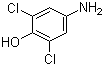
4-Amino-2,6-dichlorophenol is an aromatic compound characterized by the presence of amino and hydroxyl groups substituted with chlorine atoms on a benzene ring. Its molecular formula is C6H5Cl2NO, and it is a crystalline solid, typically light brown in color. This compound is of interest in both chemical research and industrial applications, particularly as a synthetic intermediate for pharmaceuticals and agrochemicals. The unique substitution pattern on the benzene ring provides 4-amino-2,6-dichlorophenol with specific reactivity, making it useful in a range of chemical syntheses.
The discovery of 4-amino-2,6-dichlorophenol and its structural elucidation dates back to studies on chlorinated aromatic compounds. The modification of phenol derivatives with chlorine atoms has been widely explored due to their influence on chemical stability and reactivity. These early investigations into halogenated phenols contributed to the understanding of halogen effects on aromatic systems, including electron density alterations and increased resistance to microbial degradation. Such properties make chlorinated phenols like 4-amino-2,6-dichlorophenol attractive in synthetic applications.
One of the primary uses of 4-amino-2,6-dichlorophenol is as an intermediate in the production of various pharmaceuticals. Its amino and hydroxyl functionalities allow it to serve as a precursor for synthesizing drugs that rely on these groups for biological activity. The compound is utilized in the development of antibacterial and antifungal agents, where its structural features are crucial for effective interaction with microbial targets. In addition to its use in pharmaceutical synthesis, 4-amino-2,6-dichlorophenol has applications in producing specific agrochemicals, including herbicides and fungicides. The compound’s chlorinated structure contributes to enhanced stability and persistence in agricultural applications, providing effective crop protection.
Another application of 4-amino-2,6-dichlorophenol is in dye manufacturing, where it serves as a base for producing azo dyes. Azo dyes derived from this compound exhibit enhanced color stability and resistance to environmental factors, such as UV exposure and microbial degradation. This makes them particularly suitable for textile and ink industries, where long-lasting color is essential.
The stability and reactivity of 4-amino-2,6-dichlorophenol also make it valuable in laboratory research, particularly in studying the influence of halogenated compounds on biological and environmental systems. As a representative halogenated phenol, it provides insight into how chlorinated compounds interact with enzymes and microorganisms, supporting research into environmental degradation pathways and bioremediation techniques.
While 4-amino-2,6-dichlorophenol presents advantageous properties for synthesis and industrial use, it requires careful handling due to its potential environmental and health impacts. Chlorinated phenols can persist in the environment and may pose toxicity risks, underscoring the need for controlled use and disposal practices in industries that employ this compound.
References
2015. Crystal structure of 4-amino-2,6-di-chloro-phenol. Acta crystallographica. Section E, Crystallographic communications, 71(6).
DOI: 10.1107/s2056989015009172
2008. Mechanistic aspects of 4-amino-2,6-dichlorophenol-induced in vitro nephrotoxicity. Toxicology, 245(1-2).
DOI: 10.1016/j.tox.2007.12.014
1997. Characterization of methemoglobin formation induced by 3,5-dichloroaniline, 4-amino-2,6-dichlorophenol and 3,5-dichlorophenylhydroxylamine. Toxicology, 117(2-3).
DOI: 10.1016/s0300-483x(96)03587-1
|




 GHS07 Warning Details
 chemBlink Chemical Story