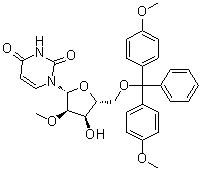
5'-O-(4,4'-dimethoxytrityl)-2'-O-methyluridine is a modified nucleoside analog characterized by a protective dimethoxytrityl (DMT) group at the 5' position and a methyl group at the 2' position of the ribose. These modifications play a crucial role in the synthesis of oligonucleotides and RNA therapeutics, enhancing their stability and efficacy.
The synthesis of 5'-O-(4,4'-dimethoxytrityl)-2'-O-methyluridine stems from efforts to improve the chemical stability and functional properties of nucleosides. The DMT group is a common protecting group in nucleoside chemistry, and its introduction promotes selective reactions at the 5' position, which is essential for oligonucleotide synthesis. On the other hand, the 2'-O-methyl modification enhances resistance to enzymatic degradation and improves binding affinity to complementary RNA strands. Together, these modifications make this compound a valuable tool in nucleic acid research and therapeutic development.
In oligonucleotide synthesis, the DMT group protects the 5' hydroxyl group from adverse reactions, ensuring proper assembly of the oligonucleotide. During RNA synthesis, the 2'-O-methyl modification enhances stability by protecting the nucleoside from ribonucleases (enzymes that degrade RNA). This increased stability is particularly beneficial in therapeutic applications, where prolonged activity and reduced degradation are desired.
The primary application of 5'-O-(4,4'-dimethoxytrityl)-2'-O-methyluridine is in the automated synthesis of oligonucleotides. During synthesis, the DMT group is selectively removed, allowing for the stepwise construction of oligonucleotides. This is critical for creating DNA and RNA sequences for research and therapeutic use.
The 2'-O-methyl modification improves the pharmacokinetic properties of RNA therapeutics. It increases resistance to nuclease degradation, enhances binding affinity to target RNA, and reduces immune activation. These properties are critical for the development of small interfering RNA (siRNA) and antisense oligonucleotides, which are used to modulate gene expression in a variety of diseases.
In research, 5'-O-(4,4'-dimethoxytrityl)-2'-O-methyluridine is used to study the structure and function of RNA. The stability afforded by the 2'-O-methyl modification allows for detailed studies of RNA interactions and mechanisms, advancing the understanding of genetic regulation and RNA-based technologies.
The main advantages of 5'-O-(4,4'-dimethoxytrityl)-2'-O-methyluridine are its stability and functionality. The DMT group ensures accurate oligonucleotide synthesis, while the 2'-O-methyl modification enhances the stability and efficacy of RNA molecules. These properties make it indispensable in both research and therapeutic settings.
Despite the many benefits of this compound, its use also presents challenges. The synthesis of modified nucleosides can be complex and costly. Furthermore, while the 2'-O-methyl modification improves stability, it can also affect the bioactivity and delivery of RNA therapeutics, requiring careful design and optimization for therapeutic applications.
|




 GHS07 Warning Details
 chemBlink Chemical Story