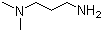
3-Dimethylaminopropylamine, commonly referred to as DMAPA, is an organic compound with the molecular formula C5H14N2. It is a clear, colorless liquid with a characteristic amine odor and is classified as a secondary amine. DMAPA is primarily known for its applications in the synthesis of various chemical products, including surfactants, adhesives, and pharmaceuticals.
The discovery of 3-dimethylaminopropylamine can be traced back to the mid-20th century when researchers were investigating the properties and potential uses of aliphatic amines. The compound is synthesized through a multi-step process, typically involving the reaction of dimethylamine with 3-bromopropylamine or other suitable intermediates. This synthetic route allows for the production of DMAPA in varying purities, making it suitable for different industrial applications.
One of the most significant applications of 3-dimethylaminopropylamine is in the production of surfactants. DMAPA is used as a key raw material in the synthesis of quaternary ammonium compounds, which serve as effective surfactants in a wide range of cleaning and personal care products. These surfactants reduce surface tension and improve wetting properties, making them essential components in formulations for detergents, shampoos, and fabric softeners. The ability of DMAPA-derived surfactants to provide foaming and emulsifying properties enhances the performance of consumer products.
In the adhesive industry, 3-dimethylaminopropylamine is employed as a curing agent for epoxy resins. When used in combination with epoxy resins, DMAPA promotes the cross-linking process, resulting in a durable and resilient bond. This application is particularly valuable in industries such as construction, automotive, and electronics, where strong adhesive properties are crucial for structural integrity and longevity. The versatility of DMAPA in different adhesive formulations allows for tailored performance characteristics, such as flexibility and heat resistance.
Furthermore, DMAPA is used in the synthesis of various pharmaceutical intermediates. Its reactive amine group allows it to participate in numerous chemical reactions, making it a valuable building block in the production of active pharmaceutical ingredients (APIs). The compound's ability to facilitate the formation of complex molecules has made it an important component in drug discovery and development, particularly in the synthesis of analgesics and anti-inflammatory agents.
Despite its beneficial applications, 3-dimethylaminopropylamine is associated with certain health and safety concerns. As an amine, it can be irritating to the skin and respiratory system upon exposure. Proper handling procedures and safety measures should be implemented in industrial settings to minimize health risks. Additionally, ongoing research is being conducted to evaluate the environmental impact of DMAPA and its degradation products, ensuring that its use aligns with sustainability goals.
In summary, 3-dimethylaminopropylamine is a significant organic compound with diverse applications in the production of surfactants, adhesives, and pharmaceutical intermediates. Its discovery and subsequent development have facilitated its use as a key ingredient in various industrial processes. As research continues to explore new applications and address safety concerns, DMAPA is expected to remain an important substance in the fields of chemistry and industry.
References
2024. Fabrication of weakly basic-functionalized poly(styrene-co-maleic anhydride) hyper-cross-linked resins for the efficient adsorption of organic acid. Journal of Polymer Research.
DOI: 10.1007/s10965-024-03890-z
2023. Ammonium salts of microcrystalline cellulose-g-poly (acrylonitrile): toxicity, antioxidant and anti-inflammatory properties. Cellulose.
DOI: 10.1007/s10570-023-05582-1
1960. Die spektrophotometrisehe Bestimmung von primären Aminen mit Hilfe von o-Aminobenzaldehyd. Fresenius' Zeitschrift für analytische Chemie.
DOI: 10.1007/bf00465470
|






 GHS02;GHS05;GHS07 Danger Details
 chemBlink Chemical Story