
Online Database of Chemicals from Around the World
| Trademax Pharmaceuticals & Chemicals Co., Ltd. | China | |||
|---|---|---|---|---|
 | www.trademaxchem.com | |||
 | +86 (21) 5238-7770 | |||
 | +86 (21) 5238-7129 | |||
 | trademax@trademaxchem.com | |||
| Chemical distributor since 2001 | ||||
| chemBlink Standard supplier since 2006 | ||||
| Jinan Chenghui-Shuangda Chemical Co., Ltd. | China | |||
|---|---|---|---|---|
| www.jnchsd.com | |||
| +86 (531) 5889-7051 +86 15053146086 | |||
| +86 (531) 5889-7093 | |||
| jnchsd@qq.com | |||
 | QQ Chat | |||
| Chemical manufacturer since 2002 | ||||
| chemBlink Standard supplier since 2007 | ||||
| Hangzhou StarShine Pharmaceutical Co., Ltd. | China | |||
|---|---|---|---|---|
| www.starshinepharm.com | |||
| +86 (571) 8512-3681 +86 13777804878 | |||
| +86 (571) 8512-2157 | |||
| sales@starshinepharm.com | |||
| QQ Chat | |||
 | Skype Chat | |||
| Chemical manufacturer since 2007 | ||||
| chemBlink Standard supplier since 2008 | ||||
| BOC Sciences | USA | |||
|---|---|---|---|---|
| www.bocsci.com | |||
| +1 (631) 485-4226 | |||
| +1 (631) 614-7828 | |||
| info@bocsci.com | |||
| Chemical manufacturer | ||||
| chemBlink Standard supplier since 2010 | ||||
| Shandong Boyuan Pharmaceutical Co., Ltd. | China | |||
|---|---|---|---|---|
| www.boyuanpharm.com | |||
| +86 (531) 6995-4981 8896-3280 +86 15806417970 | |||
| +86 (531) 8896-4879 | |||
| Jeffrey.Liu@boyuanpharm.com boyuanchem@126.com | |||
| QQ Chat | |||
| Chemical manufacturer since 2005 | ||||
| chemBlink Standard supplier since 2011 | ||||
| Hangzhou Leap Chem Co., Ltd. | China | |||
|---|---|---|---|---|
| www.leapchem.com | |||
| +86 (571) 8771-1850 | |||
| market19@leapchem.com | |||
| QQ Chat | |||
| Chemical manufacturer since 2006 | ||||
| chemBlink Standard supplier since 2015 | ||||
| Shanghai Yingrui Biopharm Co., Ltd. | China | |||
|---|---|---|---|---|
| www.shyrchem.com | |||
| +86 (21) 3358-5366 3466-6753 +86 13311639313 | |||
| +86 (21) 3497-9012 | |||
| sales02@shyrchem.com | |||
| QQ Chat | |||
| Skype Chat | |||
| Chemical manufacturer since 2009 | ||||
| chemBlink Standard supplier since 2017 | ||||
| Ji'nan Sheng Qi Medicine Science & Technology Co., Ltd. | China | |||
|---|---|---|---|---|
| www.shengqipharm.com | |||
| +86 (531) 8889-2685 | |||
| +86 (531) 8889-2171 | |||
| 2153390475@qq.com | |||
| Chemical manufacturer since 2014 | ||||
| chemBlink Standard supplier since 2017 | ||||
| Tecoland Corporation | USA | |||
|---|---|---|---|---|
| www.tecoland.com | |||
| +1 (732) 603-9577 | |||
| +1 (732) 906-1522 | |||
| info@tecoland.com | |||
| Chemical distributor since 2001 | ||||
| chemBlink Standard supplier since 2019 | ||||
| Neostar United (Changzhou) Industrial Co., Ltd. | China | |||
|---|---|---|---|---|
| www.neostarunited.com | |||
| +86 (519) 8555-7386 +86 18015025600 | |||
| +86 (519) 8555-7389 | |||
| marketing1@neostarunited.com | |||
| Chemical distributor since 2014 | ||||
| chemBlink Standard supplier since 2020 | ||||
| Typu Group | China | |||
|---|---|---|---|---|
| www.typugroup.com | |||
| +86 85220966 | |||
| order@typugroup.com | |||
| Chemical distributor since 2008 | ||||
| chemBlink Standard supplier since 2021 | ||||
| Merry Pharmtech Co., Ltd. | China | |||
|---|---|---|---|---|
| www.merrypharm.com | |||
| +86 15224069127 | |||
| merrypharmtech@gmail.com | |||
| Chemical distributor since 2012 | ||||
| chemBlink Standard supplier since 2023 | ||||
| Jinan Hanyu Chemical Co., Ltd. | China | |||
|---|---|---|---|---|
| www.hanyuchem.com | |||
| +86 (531) 6995-4981 | |||
| sales@hanyuchem.com | |||
| QQ Chat | |||
 | WeChat: dwyane-wang | |||
| Chemical manufacturer since 2024 | ||||
| chemBlink Standard supplier since 2025 | ||||
| Shandong Chenghui Shuangda Pharmaceutical Co., Ltd. | China | |||
|---|---|---|---|---|
| www.chsdpharma.com | |||
| +86-531-58897029 | |||
| ericqiao@jnchsd.com | |||
| QQ Chat | |||
| WeChat: 15550412551 | |||
 | WhatsApp:15550412551 | |||
| Chemical manufacturer since 2014 | ||||
| chemBlink Standard supplier since 2025 | ||||
| Classification | API >> Anesthetic agents >> Local anesthetics |
|---|---|
| Name | Ropivacaine hydrochloride |
| Synonyms | (S)-N-(2,6-dimethylphenyl)-1-propylpiperidine-2-carboxamide hydrochloride |
| Molecular Structure | 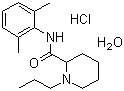 |
| Molecular Formula | C17H26N2O2.HCl.H2O |
| Molecular Weight | 328.88 |
| Protein Sequence | X |
| CAS Registry Number | 132112-35-7 |
| EC Number | 663-286-1 |
| SMILES | CCCN1CCCC[C@H]1C(=O)NC2=C(C=CC=C2C)C.O.Cl |
| Solubility | 10 mM in DMSO, 12 mg/ml in water (Expl.) |
|---|---|
| Hazard Symbols |   GHS05;GHS07 Danger Details GHS05;GHS07 Danger Details | ||||||||||||||||||||||||||||||||||||||||||||||||
|---|---|---|---|---|---|---|---|---|---|---|---|---|---|---|---|---|---|---|---|---|---|---|---|---|---|---|---|---|---|---|---|---|---|---|---|---|---|---|---|---|---|---|---|---|---|---|---|---|---|
| Risk Statements | H302-H318-H412 Details | ||||||||||||||||||||||||||||||||||||||||||||||||
| Safety Statements | P264-P264+P265-P270-P273-P280-P301+P317-P305+P354+P338-P317-P330-P501 Details | ||||||||||||||||||||||||||||||||||||||||||||||||
| Hazard Classification | |||||||||||||||||||||||||||||||||||||||||||||||||
| |||||||||||||||||||||||||||||||||||||||||||||||||
| SDS | Available | ||||||||||||||||||||||||||||||||||||||||||||||||
 Discovery and Applications
|
Ropivacaine hydrochloride is a long-acting amide-type local anesthetic that was developed to offer a safer alternative to earlier anesthetics such as bupivacaine. The discovery of ropivacaine was part of efforts during the late 20th century to produce local anesthetics with reduced cardiotoxicity and neurotoxicity while maintaining effective nerve block properties. The compound is the monohydrochloride salt of ropivacaine, which itself is the pure S-enantiomer of a pipecoloxylidide derivative. The choice of the S-enantiomer was intentional, as studies showed that it had less affinity for cardiac sodium channels compared to the R-enantiomer, leading to a lower risk of cardiac adverse effects. The development of ropivacaine hydrochloride focused on creating a drug suitable for a wide range of anesthesia applications, including surgical anesthesia, epidural anesthesia, and postoperative pain management. It was designed to provide differential blockade, meaning it could block sensory nerves more effectively than motor nerves at lower concentrations. This property is particularly useful in applications such as obstetric anesthesia, where pain relief is desired without significantly impairing motor function. Ropivacaine hydrochloride was first approved for clinical use in Sweden in the mid-1990s and has since been approved in many countries worldwide. In clinical applications, ropivacaine hydrochloride is typically administered by infiltration, nerve block, epidural, or intrathecal routes. It is commonly used for procedures requiring prolonged anesthesia, such as orthopedic surgeries, as well as for continuous epidural infusions during labor and postoperative pain control. Its lower lipophilicity compared to bupivacaine results in a slightly shorter duration of action but contributes to a better safety margin, especially with regard to systemic toxicity. Pharmacologically, ropivacaine hydrochloride works by blocking voltage-gated sodium channels on neuronal cell membranes, thereby inhibiting the initiation and propagation of action potentials. This blockade prevents the transmission of pain signals to the central nervous system. The drug exhibits a slower onset of action compared to more lipophilic anesthetics, but its duration of action is sufficiently long to meet the needs of many surgical and postoperative applications. One notable advantage of ropivacaine hydrochloride over older anesthetics is its favorable safety profile. Studies have shown that accidental intravascular injection of ropivacaine leads to less severe cardiotoxic and central nervous system toxic effects than comparable doses of bupivacaine. Nevertheless, like all local anesthetics, it can still cause adverse reactions if used improperly, including hypotension, bradycardia, seizures, and in extreme cases, cardiac arrest. Proper dosing and careful monitoring are therefore essential during its clinical use. The introduction of ropivacaine hydrochloride has had a significant impact on anesthetic practice by providing an option that balances effective sensory anesthesia with a reduced risk of serious toxicity. It remains widely used today in a variety of clinical settings, and ongoing research continues to explore its applications in multimodal pain management strategies and enhanced recovery protocols. References 2000. The Effect of Erythromycin, Fluvoxamine, and Their Combination on the Pharmacokinetics of Ropivacaine. Anesthesia and Analgesia, 91(5). DOI: 10.1097/00000539-200011000-00030 2003. Wound infiltration with ropivacaine and fentanyl: effects on postoperative pain and PONV after breast surgery. Journal of Clinical Anesthesia, 15(2). DOI: 10.1016/s0952-8180(02)00511-1 2023. Determination of Palladium as an Elemental Impurity in Ropivacaine Hydrochloride Monohydrate by Atomic Absorption Spectrometer. Pharmaceutical Chemistry Journal, 57(8). DOI: 10.1007/s11094-024-03041-0 |
| Market Analysis Reports |