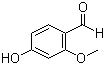
4-Hydroxy-2-methoxybenzaldehyde, also known as vanillin acetate or 4-hydroxy-2-methoxybenzaldehyde, is an organic compound with the molecular formula C9H10O3. This aromatic aldehyde is characterized by its distinct structure, which includes a hydroxy group and a methoxy group attached to a benzene ring. It is widely recognized for its occurrence in nature and its significance in various applications, particularly in the fields of flavoring, fragrance, and organic synthesis.
The discovery of 4-hydroxy-2-methoxybenzaldehyde can be traced back to the early studies of natural compounds derived from plant sources. This compound is a prominent component of vanilla extract and is primarily obtained from the vanilla bean (Vanilla planifolia). Its characteristic sweet, creamy aroma has made it a sought-after ingredient in the food industry. The natural extraction of 4-hydroxy-2-methoxybenzaldehyde from vanilla beans is an age-old process; however, advancements in organic synthesis have enabled the production of this compound through various synthetic pathways, increasing its availability for commercial use.
One of the primary applications of 4-hydroxy-2-methoxybenzaldehyde is as a flavoring agent in the food and beverage industry. Its pleasant aroma and taste make it a popular additive in various products, including baked goods, candies, and dairy products. In addition to its flavoring properties, this compound is also utilized in perfumery and cosmetics, where it contributes to the formulation of fragrances and scented products. Its ability to enhance the sensory experience of consumers has solidified its position as a valuable ingredient in these industries.
Moreover, 4-hydroxy-2-methoxybenzaldehyde serves as a key intermediate in organic synthesis. It is used as a building block in the synthesis of various organic compounds, including pharmaceuticals, agrochemicals, and fine chemicals. For instance, this compound can be transformed into derivatives that exhibit biological activities, making it a useful precursor in drug discovery and development. The versatility of 4-hydroxy-2-methoxybenzaldehyde in synthetic chemistry has made it an important reagent in the production of diverse chemical entities.
In the realm of medicinal chemistry, 4-hydroxy-2-methoxybenzaldehyde has garnered attention for its potential therapeutic applications. Research has indicated that this compound exhibits antioxidant, anti-inflammatory, and antimicrobial properties, suggesting its usefulness in the development of health-promoting formulations. Studies exploring its role in various biological systems have revealed promising results, highlighting the compound's potential as a bioactive agent.
Furthermore, 4-hydroxy-2-methoxybenzaldehyde is being investigated for its environmental applications. Its natural occurrence and biodegradable nature make it a suitable candidate for use in eco-friendly formulations. The compound's ability to act as a natural preservative has sparked interest in its potential to replace synthetic additives in various products, aligning with the growing demand for sustainable alternatives in the market.
In summary, 4-hydroxy-2-methoxybenzaldehyde is a multifaceted compound with diverse applications in flavoring, fragrance, organic synthesis, and medicinal chemistry. Its historical significance as a natural product, coupled with its synthetic accessibility, positions it as a valuable ingredient across multiple industries. Ongoing research into its biological activities and environmental benefits continues to expand its potential applications, ensuring its relevance in contemporary scientific and commercial pursuits.
References
2023. Multimodal action of KRP203 on phosphoinositide kinases in vitro and in cells. Biochemical and Biophysical Research Communications.
DOI: 10.1016/j.bbrc.2023.08.050
2011. Antifungal activity of redox-active benzaldehydes that target cellular antioxidation. Annals of Clinical Microbiology and Antimicrobials.
DOI: 10.1186/1476-0711-10-23
2010. Concise Synthesis of Licochalcone A through Water-Accelerated [3,3]-Sigmatropic Rearrangement of an Aryl Prenyl Ether. Synthesis.
DOI: 10.1055/s-0030-1258381
|




 GHS07 Warning Details
 Discovery and Applications