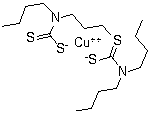
Bis(N,N-dibutyldithiocarbamato)copper, often referred to as Cu(DBDC)₂, is a coordination compound of copper characterized by the presence of dithiocarbamate ligands. Dithiocarbamates are a class of compounds derived from dithiocarbamic acid and are known for their ability to form stable complexes with various metal ions. This particular compound has garnered interest due to its unique properties and potential applications in several fields, including catalysis, materials science, and agriculture.
The discovery of bis(N,N-dibutyldithiocarbamato)copper can be traced back to the ongoing exploration of metal dithiocarbamate complexes in the mid-20th century. Researchers were investigating the coordination chemistry of copper and its potential applications in different industrial processes. The work of chemists in this area led to the synthesis and characterization of numerous dithiocarbamate complexes, including Cu(DBDC)₂. The stability and reactivity of these complexes have made them subjects of extensive study, particularly in relation to their roles in catalysis and material properties.
Bis(N,N-dibutyldithiocarbamato)copper exhibits significant potential as a catalyst in various chemical reactions. Its ability to facilitate electron transfer and promote the formation of reactive intermediates is particularly valuable in organic synthesis. For instance, Cu(DBDC)₂ has been explored for its efficacy in cross-coupling reactions, which are crucial in the synthesis of complex organic molecules. The unique electronic properties of copper, combined with the stabilizing effects of the dithiocarbamate ligands, enhance the catalytic activity of the compound, making it a suitable candidate for applications in pharmaceutical and agrochemical industries.
In addition to its catalytic applications, bis(N,N-dibutyldithiocarbamato)copper has been investigated for its use as a precursor in the synthesis of metal sulfide nanoparticles. The controlled decomposition of Cu(DBDC)₂ can lead to the formation of copper sulfide (CuS) nanoparticles, which have promising applications in electronics, solar energy conversion, and environmental remediation. The size and morphology of the resulting nanoparticles can be tuned by adjusting the reaction conditions, allowing for the development of materials with tailored properties for specific applications.
Another important application of bis(N,N-dibutyldithiocarbamato)copper is in the field of agriculture. Compounds containing dithiocarbamates have been recognized for their fungicidal and pesticidal properties. Cu(DBDC)₂ has been studied for its effectiveness against various plant pathogens, providing an environmentally friendly alternative to conventional pesticides. The use of copper dithiocarbamates in agricultural practices is beneficial due to their relatively low toxicity to humans and animals, coupled with their ability to control fungal diseases in crops.
The compound also exhibits interesting photophysical properties, which have led to investigations into its use in luminescent materials. Copper-based dithiocarbamate complexes can display strong luminescence, making them suitable candidates for applications in optoelectronic devices and sensors. Research in this area focuses on the development of new materials for light-emitting diodes (LEDs) and other electronic applications, leveraging the unique properties of Cu(DBDC)₂.
Despite its numerous applications, it is essential to handle bis(N,N-dibutyldithiocarbamato)copper with care, as it can pose health risks if not managed properly. Prolonged exposure to the compound can lead to respiratory irritation and skin sensitization. Therefore, proper safety precautions should be implemented when working with this substance, including the use of personal protective equipment and adequate ventilation.
In summary, bis(N,N-dibutyldithiocarbamato)copper is a versatile coordination compound with significant applications in catalysis, materials science, and agriculture. Its discovery has opened avenues for exploring the properties and potential uses of copper dithiocarbamate complexes. The ongoing research into Cu(DBDC)₂ highlights its importance in advancing various technological and industrial fields.
|




 GHS07 Warning Details
 chemBlink Chemical Story