
Online Database of Chemicals from Around the World
| Hangzhou Verychem Science And Technology Co., Ltd. | China | |||
|---|---|---|---|---|
 | www.verychem.com | |||
 | +86 (571) 8816-2785 +86 13606544505 | |||
 | +86 (571) 8816-2787 | |||
 | lucy@verychem.com | |||
| Chemical manufacturer since 2004 | ||||
| chemBlink Massive supplier since 2021 | ||||
| Futoh Chemicals Co., Ltd. | Japan | |||
|---|---|---|---|---|
| www.futoh.co.jp | |||
| +81 (52) 521-8171 | |||
| +81 (52) 521-8793 | |||
| tokoro@futoh.co.jp | |||
| Chemical manufacturer | ||||
| chemBlink Standard supplier since 2007 | ||||
| Simagchem Corporation | China | |||
|---|---|---|---|---|
| www.simagchem.com | |||
| +86 13806087780 | |||
| +86 (592) 268-0237 | |||
| sale@simagchem.com | |||
| Chemical manufacturer since 2002 | ||||
| chemBlink Standard supplier since 2008 | ||||
| Wuhan Organic Synthetic Material Research Institute | China | |||
|---|---|---|---|---|
| www.whorganic.com | |||
| +86 (27) 8818-9660 | |||
| +86 (27) 8341-1474 | |||
| organic@hi2000.com | |||
| Chemical manufacturer | ||||
| chemBlink Standard supplier since 2008 | ||||
| Extrasynthese Chemical S.A.S. | France | |||
|---|---|---|---|---|
| www.extrasynthese.com | |||
| +33 (47) 898-2034 | |||
| +33 (47) 898-1945 | |||
| info@extrasynthese.com | |||
| Chemical manufacturer | ||||
| chemBlink Standard supplier since 2009 | ||||
| Hefei TNJ Chemical Industry Co., Ltd. | China | |||
|---|---|---|---|---|
| www.tnjchem.com | |||
| +86 (551) 6541-8684 | |||
| +86 (551) 6541-8697 | |||
| sales@tnjchem.com | |||
| Chemical manufacturer since 2001 | ||||
| chemBlink Standard supplier since 2010 | ||||
| BOC Sciences | USA | |||
|---|---|---|---|---|
| www.bocsci.com | |||
| +1 (631) 485-4226 | |||
| +1 (631) 614-7828 | |||
| info@bocsci.com | |||
| Chemical manufacturer | ||||
| chemBlink Standard supplier since 2010 | ||||
| Win-Win Chemical Co., Ltd. | China | |||
|---|---|---|---|---|
| www.win-winchemical.com | |||
| +86 (577) 6449-8589 +86 15325081899 | |||
| +86 (577) 5699-4596 | |||
| sales@win-winchemical.com winwinchemical@gmail.com | |||
 | QQ Chat | |||
 | Skype Chat | |||
| Chemical manufacturer since 2007 | ||||
| chemBlink Standard supplier since 2011 | ||||
| Aktin Chemicals Inc | China | |||
|---|---|---|---|---|
| www.aktinchem.com | |||
| +86 400-028-7725 | |||
| +86 (28) 8515-2372 | |||
| info@aktinchem.com | |||
| QQ Chat | |||
| Chemical manufacturer | ||||
| chemBlink Standard supplier since 2011 | ||||
| Hubei Lansun Biochemistry Pharmaceutical Co., Ltd. | China | |||
|---|---|---|---|---|
| www.lansunpharma.com | |||
| +86 (714) 639-5977 | |||
| +86 (714) 639-5877 | |||
| info@lansunpharma.com | |||
| QQ Chat | |||
| Chemical manufacturer since 2009 | ||||
| chemBlink Standard supplier since 2013 | ||||
| Zibo Kunran Enterprises Co., Ltd. | China | |||
|---|---|---|---|---|
| www.kunranchem.com | |||
| +86 (533) 520-0667 | |||
| +86 (533) 520-7669 | |||
| monazhangchem@hotmail.com | |||
| QQ Chat | |||
| Chemical manufacturer since 2003 | ||||
| chemBlink Standard supplier since 2014 | ||||
| Eastar Chemical Corporation | USA | |||
|---|---|---|---|---|
| www.eastarchem.com | |||
| +1 800-898-2436 | |||
| +1 (877) 898-2436 | |||
| info@eastarchem.com | |||
| Chemical manufacturer since 1989 | ||||
| chemBlink Standard supplier since 2014 | ||||
| Hangzhou Leap Chem Co., Ltd. | China | |||
|---|---|---|---|---|
| www.leapchem.com | |||
| +86 (571) 8771-1850 | |||
| market19@leapchem.com | |||
| QQ Chat | |||
| Chemical manufacturer since 2006 | ||||
| chemBlink Standard supplier since 2015 | ||||
| Tianjin Reliable Pharmatech Co., Ltd. | China | |||
|---|---|---|---|---|
| www.reliablepharmatech.com | |||
| +86 (22) 2856-7687 | |||
| sales@reliablepharmatech.com | |||
| Chemical distributor since 2017 | ||||
| chemBlink Standard supplier since 2017 | ||||
| Chengdu Biopurify Phytochemicals Ltd. | China | |||
|---|---|---|---|---|
| www.phytopurify.com | |||
| +86 (28) 8263-3860 8263-3987 | |||
| +86 (28) 8263-3165 | |||
| sales@biopurify.com biopurify@gmail.com | |||
| QQ Chat | |||
| Skype Chat | |||
| Chemical manufacturer | ||||
| chemBlink Standard supplier since 2017 | ||||
| Wuhan Haishan Technology Co., Ltd. | China | |||
|---|---|---|---|---|
| www.haishankj.net | |||
| +86 17720597715 | |||
| +86 (27) 8663-7880 | |||
| 3271849079@qq.com | |||
| Chemical manufacturer since 2015 | ||||
| chemBlink Standard supplier since 2018 | ||||
| Neostar United (Changzhou) Industrial Co., Ltd. | China | |||
|---|---|---|---|---|
| www.neostarunited.com | |||
| +86 (519) 8555-7386 +86 18015025600 | |||
| +86 (519) 8555-7389 | |||
| marketing1@neostarunited.com | |||
| Chemical distributor since 2014 | ||||
| chemBlink Standard supplier since 2020 | ||||
| Hubei guoheng pharmaceutical technology co., Ltd | China | |||
|---|---|---|---|---|
| www.ghpharmatech.com | |||
| +86 15572577573 | |||
| 1332578202@qq.com | |||
| Chemical distributor since 2020 | ||||
| chemBlink Standard supplier since 2020 | ||||
| Cfm Oskar Tropitzsch GmbH | Germany | |||
|---|---|---|---|---|
| www.cfmot.de | |||
| +49 (9231) 9619-0 | |||
| +49 (9231) 9619-60 | |||
| info@cfmot.de | |||
| Chemical distributor since 1985 | ||||
| chemBlink Standard supplier since 2022 | ||||
| Wuhan Shingwen Biotech Co., Ltd. | China | |||
|---|---|---|---|---|
| www.shingwen.com | |||
| +86-17282536078 | |||
| 3042184429@qq.com | |||
| QQ Chat | |||
| Skype Chat | |||
 | WeChat: +86-17282536078 | |||
 | WhatsApp:+86-17282536078 | |||
| Chemical distributor since 2024 | ||||
| chemBlink Standard supplier since 2024 | ||||
| Hubei Sinem Flavor Co., Ltd. | China | |||
|---|---|---|---|---|
| www.sinem.cn | |||
| +86 (27) 8818-9660 | |||
| sales@sinem.cn | |||
| Chemical manufacturer since 2018 | ||||
| chemBlink Standard supplier since 2025 | ||||
| Shanghai Jiexiao Economic Trade Co., Ltd. | China | |||
|---|---|---|---|---|
| www.jiexiao.com | |||
| +86 (21) 6231-0939 | |||
| +86 (21) 6230-3768 | |||
| sales@jiexiao.com | |||
| Chemical distributor | ||||
| Melford Laboratories Limited | UK | |||
|---|---|---|---|---|
| www.melford.co.uk | |||
| +44 (1449) 741-178 | |||
| +44 (1449) 741-217 | |||
| pfranklin@melford.co.uk sales@melford.co.uk | |||
| Chemical manufacturer since 1985 | ||||
| Sinova Corporation | USA | |||
|---|---|---|---|---|
| www.sinovainc.com | |||
| +1 (301) 961-1525 | |||
| +1 (240) 235-4288 | |||
| sales@sinovainc.com | |||
| Chemical manufacturer | ||||
| Yantai Aodong Chemical Material Co., Ltd. | China | |||
|---|---|---|---|---|
| www.aodongchem.com | |||
| +86 (535) 652-7629 651-3909 | |||
| +86 (535) 652-7629 | |||
| aodong@aodongchem.com | |||
| Chemical manufacturer | ||||
| Thermo Fisher Scientific | USA | |||
|---|---|---|---|---|
| www.fishersci.com | |||
| +1 (800) 766-7000 | |||
| +1 (800) 926-1166 | |||
| fs.order@thermofisher.com | |||
| Chemical manufacturer | ||||
| Anvia Chemicals, LLC | USA | |||
|---|---|---|---|---|
| www.anviachem.com | |||
| +1 (414) 534-7845 | |||
| +1 (414) 762-5539 | |||
| sales@anviachem.com | |||
| Chemical manufacturer | ||||
| Whyte Chemicals | UK | |||
|---|---|---|---|---|
| www.whytechemicals.co.uk | |||
| +44 (20) 8346-5946 | |||
| +44 (20) 8349-4589 | |||
| sales@whytechemicals.co.uk | |||
| Chemical distributor | ||||
| Classification | Pharmaceutical intermediate >> Heterocyclic compound intermediate >> Pyrimidine compound >> Carboxylic acid |
|---|---|
| Name | trans-Cinnamic acid |
| Synonyms | 3-Phenyl-2-propenoic acid; trans-3-Phenylacrylic acid |
| Molecular Structure | 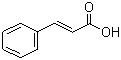 |
| Molecular Formula | C9H8O2 |
| Molecular Weight | 148.16 |
| CAS Registry Number | 140-10-3 |
| EC Number | 205-398-1 |
| SMILES | C1=CC=C(C=C1)/C=C/C(=O)O |
| Density | 1.248 |
|---|---|
| Melting point | 131-136 °C |
| Boiling point | 300 °C |
| Water solubility | 0.4 g/L (20 °C) |
| Hazard Symbols |  GHS07 Warning Details GHS07 Warning Details | ||||||||||||||||||||
|---|---|---|---|---|---|---|---|---|---|---|---|---|---|---|---|---|---|---|---|---|---|
| Risk Statements | H315-H319-H335 Details | ||||||||||||||||||||
| Safety Statements | P261-P264-P264+P265-P271-P280-P302+P352-P304+P340-P305+P351+P338-P319-P321-P332+P317-P337+P317-P362+P364-P403+P233-P405-P501 Details | ||||||||||||||||||||
| Hazard Classification | |||||||||||||||||||||
| |||||||||||||||||||||
| SDS | Available | ||||||||||||||||||||
 Discovery and Applications
|
Trans-cinnamic acid is a naturally occurring organic compound first isolated from cinnamon oil in 1831 by French chemist Auguste Bussy. Trans-cinnamic acid is found in various plants including cinnamon, shea butter, and Peru balsam. Its unique aroma and chemical properties have attracted the interest of the scientific community, leading to research into its synthesis, biological activity, and multiple applications. Trans-cinnamic acid is widely used in the flavor and fragrance industry and is a key ingredient in perfumes, cosmetics, and food flavorings. Its sweet, balsamic aroma is reminiscent of cinnamon, adding warmth and depth to perfume compositions. In the food industry, trans-cinnamic acid is used as a flavoring agent to add a spicy, aromatic flavor to baked goods, confectionery, and beverages. Trans-cinnamic acid has a variety of pharmacological properties, including antioxidant, anti-inflammatory, and antimicrobial effects. It is used in pharmaceutical formulations and has potential efficacy in the treatment of inflammatory diseases, skin diseases, and microbial infections. Derivatives of trans-cinnamic acid are also being studied extensively as novel drug candidates in drug development. Trans-cinnamic acid is used as a UV absorber in sunscreen formulations and cosmetics to protect the skin from harmful UV rays. Its conjugated double bond structure absorbs UV-B and UV-C wavelengths, reducing the risk of sunburn, premature aging, and skin cancer caused by excessive sun exposure. Trans-cinnamic acid enhances the photoprotective efficacy of sunscreen products. Trans-cinnamic acid and its derivatives have antimicrobial properties and are used as preservatives in food and beverage products to inhibit microbial growth and extend shelf life. They help prevent spoilage and foodborne illness caused by bacteria, fungi, and yeasts. Trans-cinnamic acid derivatives such as cinnamaldehyde are commonly used in food preservation due to their strong antimicrobial activity. Trans-cinnamic acid is a versatile building block used in organic synthesis to prepare a variety of fine chemicals, pharmaceutical intermediates, and agrochemicals. Its functional group reactivity allows the synthesis of a variety of compounds through chemical transformations such as esterification, hydrogenation, and oxidation for the synthesis of flavors, fragrances, and pharmaceuticals. Trans-cinnamic acid plays a role in plant physiology as a signaling molecule and plant growth regulator. It regulates plant development, photosynthesis, and defense responses to biotic and abiotic stresses. Trans-cinnamic acid derivatives (such as methyl cinnamate) are used as growth regulators and crop protection agents in agriculture to promote plant growth and increase productivity. References 2012. Amelioration of cyclophosphamide induced myelosuppression and oxidative stress by cinnamic acid. Chemico-Biological Interactions. DOI: 10.1016/j.cbi.2012.01.001 2024. Unraveling the phytochemical complexity and antimicrobial potency of introduced versus native Argania spinosa trees in Eastern Morocco. Chemical Papers. DOI: 10.1007/s11696-024-03739-1 2010. Cinnamon extract induces tumor cell death through inhibition of NFkappaB and AP1. BMC Cancer. DOI: 10.1186/1471-2407-10-392 |
| Market Analysis Reports |