
Online Database of Chemicals from Around the World
| Hangzhou Verychem Science And Technology Co., Ltd. | China | |||
|---|---|---|---|---|
 | www.verychem.com | |||
 | +86 (571) 8816-2785 +86 13606544505 | |||
 | +86 (571) 8816-2787 | |||
 | lucy@verychem.com | |||
| Chemical manufacturer since 2004 | ||||
| chemBlink Massive supplier since 2021 | ||||
| Epochem Co., Ltd. | China | |||
|---|---|---|---|---|
| www.epochem.com | |||
| +86 (21) 6760-1595 6760-1597 | |||
| +86 (21) 6760-1605 | |||
| seth_wang@epochem.com | |||
 | QQ Chat | |||
| Chemical manufacturer since 2006 | ||||
| chemBlink Standard supplier since 2005 | ||||
| Qingdao Free Trade Zone United International Co., Ltd. | China | |||
|---|---|---|---|---|
| www.unitedint.com | |||
| +86 (532) 83893696 +86 13808950921 | |||
| +86 (532) 8389-3695 | |||
| jason.wang@unitedint.com | |||
| QQ Chat | |||
| Chemical distributor | ||||
| chemBlink Standard supplier since 2006 | ||||
| Simagchem Corporation | China | |||
|---|---|---|---|---|
| www.simagchem.com | |||
| +86 13806087780 | |||
| +86 (592) 268-0237 | |||
| sale@simagchem.com | |||
| Chemical manufacturer since 2002 | ||||
| chemBlink Standard supplier since 2008 | ||||
| Nanjing MSN Chemical Co., Ltd. | China | |||
|---|---|---|---|---|
| www.msnchem.com | |||
| +86 (25) 5701-5632 +86 18013328036 | |||
| +86 (25) 5701-9235 | |||
| info@msnchem.com | |||
| QQ Chat | |||
 | Skype Chat | |||
| Chemical manufacturer since 2013 | ||||
| chemBlink Standard supplier since 2008 | ||||
| Discovery Fine Chemicals Ltd. | UK | |||
|---|---|---|---|---|
| www.discofinechem.com | |||
| +44 (1202) 874-517 | |||
| +44 (845) 094-4385 | |||
| pjc@discofinechem.com | |||
| Chemical manufacturer | ||||
| chemBlink Standard supplier since 2009 | ||||
| Shanghai ZaiQi Bio-Tech Co., Ltd. | China | |||
|---|---|---|---|---|
| www.chemzq.com | |||
| +86 (21) 5482-4098 | |||
| +86 (21) 5482-4069 | |||
| sales1@chemzq.com | |||
| QQ Chat | |||
| Chemical manufacturer since 2004 | ||||
| chemBlink Standard supplier since 2009 | ||||
| Singsino Group Limited | China | |||
|---|---|---|---|---|
| www.singsino.com | |||
| +86 (532) 8580-8802 | |||
| +86 (532) 8580-8803 | |||
| chinaglucose@gmail.com | |||
| Chemical manufacturer | ||||
| chemBlink Standard supplier since 2009 | ||||
| Hefei TNJ Chemical Industry Co., Ltd. | China | |||
|---|---|---|---|---|
| www.tnjchem.com | |||
| +86 (551) 6541-8684 | |||
| +86 (551) 6541-8697 | |||
| sales@tnjchem.com | |||
| Chemical manufacturer since 2001 | ||||
| chemBlink Standard supplier since 2010 | ||||
| Sanxinyuan Food Industry Corp.Ltd. | China | |||
|---|---|---|---|---|
| www.sanxinyuanfood.com | |||
| +86 (534) 7126-6078 | |||
| +86 (534) 7126-6088 | |||
| export@sanxinyuanfood.com | |||
| Chemical manufacturer since 1997 | ||||
| chemBlink Standard supplier since 2010 | ||||
| Hebei Huaxu Pharmaceutical Co., Ltd. | China | |||
|---|---|---|---|---|
| www.huaxu.com.cn | |||
| +86 (311) 8910-5199 | |||
| +86 (311) 8910-5109 | |||
| jesse_ji@live.cn | |||
| Chemical manufacturer | ||||
| chemBlink Standard supplier since 2010 | ||||
| Glentham Life Sciences | UK | |||
|---|---|---|---|---|
| www.glenthamls.com | |||
| +44 (2033) 978-798 | |||
| +44 (2033) 978-909 | |||
| info@glenthamls.com | |||
| Chemical distributor since 2013 | ||||
| chemBlink Standard supplier since 2013 | ||||
| Zhejiang Huakang Pharmaceutical Co., Ltd. | China | |||
|---|---|---|---|---|
| www.huakangpharma.com | |||
| +86 (571) 8742-5371 | |||
| +86 (571) 8581-2010 | |||
| wangyuan@huakangpharma.com | |||
| QQ Chat | |||
| Chemical manufacturer since 1962 | ||||
| chemBlink Standard supplier since 2014 | ||||
| Hangzhou Leap Chem Co., Ltd. | China | |||
|---|---|---|---|---|
| www.leapchem.com | |||
| +86 (571) 8771-1850 | |||
| market19@leapchem.com | |||
| QQ Chat | |||
| Chemical manufacturer since 2006 | ||||
| chemBlink Standard supplier since 2015 | ||||
| Creative Proteomics | USA | |||
|---|---|---|---|---|
| www.creative-proteomics.com | |||
| +1 (631) 593-0501 | |||
| +1 (631) 614-7828 | |||
| contact@creative-proteomics.com | |||
| Chemical manufacturer since 2008 | ||||
| chemBlink Standard supplier since 2015 | ||||
| Riverland Trading LLC. | USA | |||
|---|---|---|---|---|
| www.riverlandtrading.com | |||
| +1 (336).944-2293 | |||
| bens@riverlandtrading.com | |||
| Chemical distributor | ||||
| chemBlink Standard supplier since 2023 | ||||
| BLIT (Hefei) Chemical Co.,ltd | China | |||
|---|---|---|---|---|
| www.blitchem.com | |||
| +86-551-62622640 | |||
| info@blitchem.com | |||
| Chemical manufacturer since 2017 | ||||
| chemBlink Standard supplier since 2024 | ||||
| APAC Sourcing Solutions | India | |||
|---|---|---|---|---|
| www.apacss.com | |||
| +91 9818041200 | |||
| ibd@apacss.com | |||
 | WhatsApp:9818041200 | |||
| Chemical distributor since 2004 | ||||
| chemBlink Standard supplier since 2025 | ||||
| Melford Laboratories Limited | UK | |||
|---|---|---|---|---|
| www.melford.co.uk | |||
| +44 (1449) 741-178 | |||
| +44 (1449) 741-217 | |||
| pfranklin@melford.co.uk sales@melford.co.uk | |||
| Chemical manufacturer since 1985 | ||||
| Zibo Feitian International Trading Co., Ltd. | China | |||
|---|---|---|---|---|
| www.feitianindustry.com | |||
| +86 (533) 276-3996 | |||
| info@feitianindustry.com | |||
| Chemical distributor since 2005 | ||||
| Avonchem/Chromos Express Ltd. | UK | |||
|---|---|---|---|---|
| www.avonchem.co.uk | |||
| +44 (1625) 434-300 | |||
| +44 (1625) 869-777 | |||
| info@avonchem.co.uk | |||
| Chemical manufacturer | ||||
| Jizhou Huayang Chemical Co., Ltd. | China | |||
|---|---|---|---|---|
| www.huayangchems.com | |||
| +86 (318) 863-8866 | |||
| +86 (318) 863-8856 | |||
| trade@huayangchems.com | |||
| Chemical manufacturer | ||||
| Beijing Four Principles Technology Co., Ltd. | China | |||
|---|---|---|---|---|
| www.fourprinciple.cn | |||
| +86 (10) 8494-7198 | |||
| +86 (10) 8494-7198 | |||
| fourprinciple@gmail.com | |||
| Chemical manufacturer since 2004 | ||||
| Omicron Biochemicals, Inc. | USA | |||
|---|---|---|---|---|
| www.omicronbio.com | |||
| +1 (574) 287-6910 | |||
| +1 (574) 287-7165 | |||
| omicron@omicronbio.com | |||
| Chemical manufacturer | ||||
| Anvia Chemicals, LLC | USA | |||
|---|---|---|---|---|
| www.anviachem.com | |||
| +1 (414) 534-7845 | |||
| +1 (414) 762-5539 | |||
| sales@anviachem.com | |||
| Chemical manufacturer | ||||
| Spectrum Chemical Mfg. Corp. | USA | |||
|---|---|---|---|---|
| www.spectrumchemical.com | |||
| +1 (310) 516-8000 | |||
| +1 (310) 516-7512 | |||
| sales@spectrumchemical.com | |||
| Chemical manufacturer | ||||
| Shanghai Univic International Trading Corporation | China | |||
|---|---|---|---|---|
| www.sh-univic.com | |||
| +86 (21) 5836-0151 5836-0152 | |||
| +86 (21) 5836-0153 | |||
| info@sh-univic.com | |||
| Chemical distributor | ||||
| Whyte Chemicals | UK | |||
|---|---|---|---|---|
| www.whytechemicals.co.uk | |||
| +44 (20) 8346-5946 | |||
| +44 (20) 8349-4589 | |||
| sales@whytechemicals.co.uk | |||
| Chemical distributor | ||||
| Chemos GmbH & Co. KG | Germany | |||
|---|---|---|---|---|
| www.chemos.de | |||
| +49 871-966346-0 | |||
| +49 871-966346-13 | |||
| chemos@chemos.de | |||
| Chemical distributor | ||||
| CarboMer, Inc. | USA | |||
|---|---|---|---|---|
| www.carbomer.com | |||
| +1 (858) 552-0992 | |||
| +1 (858) 552-0999 | |||
| sales@carbomer.com | |||
| Chemical manufacturer | ||||
| Linyi Unite Bio-technology Co., Ltd. | China | |||
|---|---|---|---|---|
| www.sinoynt.com | |||
| +86 (539) 237-2111 | |||
| +86 (539) 237-2111 | |||
| yntfirst@163.com | |||
| Chemical manufacturer since 2011 | ||||
| Classification | API >> Urinary system medication >> Dehydrated medicine |
|---|---|
| Name | D-Sorbitol |
| Synonyms | D-Glucitol; Sorbitol BP |
| Molecular Structure | 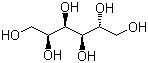 |
| Molecular Formula | C6H14O6 |
| Molecular Weight | 182.17 |
| CAS Registry Number | 50-70-4 |
| EC Number | 200-061-5 |
| FEMA | 3029 |
| SMILES | C([C@H]([C@H]([C@@H]([C@H](CO)O)O)O)O)O |
| Melting point | 95-99 °C |
|---|---|
| alpha | 4 ° (per eur. pharm.) |
| Water solubility | SOLUBLE |
| Hazard Symbols |  GHS07 Warning Details GHS07 Warning Details |
|---|---|
| Risk Statements | H315-H319-H335 Details |
| Safety Statements | P261-P305+P351+P338 Details |
| SDS | Available |
 Discovery and Applications
|
D-sorbitol was first discovered in 1872 by French chemist Jean-Baptiste Boussingault, who extracted it from the berries of the sorbus tree (Sorbus aucuparia), hence the name sorbitol. It occurs naturally in many fruits and berries, including apples, pears, peaches, and plums. Sorbitol's ability to retain moisture and mild sweetness make it of interest in a variety of applications. Commercial production of D-sorbitol involves hydrogenation of glucose derived from corn or wheat starch. The process converts glucose into sorbitol, resulting in a stable and versatile product. The production method is efficient and affordable, which has led to its widespread use. Sorbitol is commonly used as a low-calorie sweetener in a variety of foods. Its mild sweetness (about 60% of sucrose) and low glycemic index make it suitable for sugar-free and diabetic-friendly foods. It is used in sugar-free gum, candies, and baked goods to provide sweetness without adding calories or causing a spike in blood sugar levels. In addition to being a sweetener, sorbitol is also used as a humectant, helping to retain moisture in foods, thereby extending their shelf life and maintaining texture. It is used in products such as cookies, cakes and frozen desserts to prevent drying out and improve consistency. Sorbitol is an important ingredient in the pharmaceutical industry, used as an excipient in syrups, tablets and oral solutions. It improves the taste of liquid medicines as a sugar substitute without causing tooth decay. Sorbitol is valuable in pharmaceutical formulations due to its ability to enhance the stability and bioavailability of active ingredients. In cosmetics, sorbitol is used as a humectant and thickener in lotions, creams and gels. Its ability to absorb and retain water helps keep the skin moisturized, making it a popular ingredient in moisturizers and other skin care products. Sorbitol is mild and non-irritating, making it suitable for sensitive skin formulations. Sorbitol is a polyol in the synthesis of surfactants and emulsifiers, which are important in the production of detergents and cleaners. Its chemical properties also make it a precursor for the production of ascorbic acid (vitamin C), highlighting its role in industrial chemistry. In the plastics industry, sorbitol is used as a plasticizer and stabilizer to enhance the flexibility and durability of products such as resins and adhesives. Its ability to improve the physical properties of materials extends its usefulness to a variety of manufacturing processes. D-Sorbitol is generally recognized as safe (GRAS) by regulatory agencies such as the FDA. It is non-toxic and well tolerated in food and drug applications. However, excessive consumption can cause gastrointestinal upset as it has a laxative effect. In industrial applications, handling guidelines should be followed to ensure safety and prevent environmental contamination. References 2023. Identification, Synthesis, and Characterization of Potential Dichloro Impurity: N,N-Dimethyl-3-Phenyl-2, 3-Dichloropropylamine in the Synthesis of Atomoxetine. Pharmaceutical Chemistry Journal, 56(11). DOI: 10.1007/s11094-024-03039-8 2022. N,N-dimethyl fluorosulfonamide for suppressed aluminum corrosion in lithium bis(trifluoromethanesulfonyl)imide-based electrolytes. Nano Research, 15(12). DOI: 10.1007/s12274-022-4669-8 1948. The Addition of Dimethylamine to Benzoquinone. Journal of the American Chemical Society, 70(2). DOI: 10.1021/ja01182a502 |
| Market Analysis Reports |