
Online Database of Chemicals from Around the World
| Qingdao Free Trade Zone United International Co., Ltd. | China | |||
|---|---|---|---|---|
 | www.unitedint.com | |||
 | +86 (532) 83893696 +86 13808950921 | |||
 | +86 (532) 8389-3695 | |||
 | jason.wang@unitedint.com | |||
 | QQ Chat | |||
| Chemical distributor | ||||
| chemBlink Standard supplier since 2006 | ||||
| BOC Sciences | USA | |||
|---|---|---|---|---|
| www.bocsci.com | |||
| +1 (631) 485-4226 | |||
| +1 (631) 614-7828 | |||
| info@bocsci.com | |||
| Chemical manufacturer | ||||
| chemBlink Standard supplier since 2010 | ||||
| BLIT (Hefei) Chemical Co.,ltd | China | |||
|---|---|---|---|---|
| www.blitchem.com | |||
| +86-551-62622640 | |||
| info@blitchem.com | |||
| Chemical manufacturer since 2017 | ||||
| chemBlink Standard supplier since 2024 | ||||
| Classification | Organic raw materials >> Amino compound >> Sulfonic acid amino compound |
|---|---|
| Name | Molasses |
| Synonyms | Beet molasses |
| Molecular Structure | 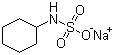 |
| Molecular Formula | C6H12NNaO3S |
| Molecular Weight | 201.22 |
| CAS Registry Number | 68476-78-8 |
| EC Number | 270-698-1 |
| SMILES | C1CCC(CC1)NS(=O)(=O)[O-].[Na+] |
 chemBlink Chemical Story
|
The discovery of molasses dates back to ancient times, when civilizations in Asia and the Mediterranean first began to extract sugar from sugar cane. Molasses is the residue left over from the sugar refining process and was initially considered a byproduct. Over time, its unique flavor and properties led to it being considered a valuable commodity with a variety of uses. Molasses is primarily composed of sucrose, glucose, and fructose, as well as various vitamins and minerals from sugar cane or sugar beets. Its color and flavor profile vary depending on the level of sugar extraction and subsequent processing steps. Common types include light, dark, and blackstrap molasses, each with unique properties suitable for different applications. In culinary traditions around the world, molasses is a natural sweetener and flavor enhancer. Its rich caramel flavor adds depth to baked goods such as gingerbread, cookies, and cakes. Molasses is also used in marinades, sauces, and glazes, giving rich color and unique flavor to savory dishes such as barbecue sauce and baked beans. Its viscosity and moisture-holding properties contribute to the texture and shelf life of foods. Molasses contains essential minerals such as iron, calcium, potassium, and magnesium, making it a nutrient-rich alternative to refined sugar. It provides dietary antioxidants and supports bone health, especially in diets deficient in these micronutrients. While high in calories and carbohydrates, its moderate glycemic index makes it suitable for controlled intake as part of a balanced diet. In addition to its culinary uses, molasses plays an important role in various industrial sectors. In agriculture, molasses is a component of animal feed and livestock dietary supplements, providing energy and enhancing palatability. Molasses is also used in the fermentation process for alcohol production, helping to increase the flavor and alcohol content of beverages such as rum and beer. Molasses production is consistent with sustainable agricultural practices, utilizing sugarcane byproducts and minimizing waste. Its biodegradability and renewable source support the adoption of environmentally friendly alternatives by industries seeking to reduce their carbon footprint and promote sustainable resource management. While molasses has nutritional value, its high sugar content requires careful consumption, especially for individuals monitoring their sugar intake or managing diabetes. As with all sweeteners, moderation is key to enjoying its flavor and health benefits without compromising dietary goals. Ongoing research explores innovative uses for molasses in biofuel production, biodegradable plastics, and pharmaceutical applications. Advances in extraction and processing technologies are designed to improve their purity, flavor consistency, and functionality in new product formulations across a variety of industries. |
| Market Analysis Reports |