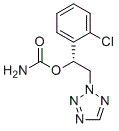
Cenobamate is an anticonvulsant medication primarily developed for the treatment of focal onset seizures in adults. Chemically, it is a substituted carbamate derivative with the molecular structure 2-(2-chlorophenyl)-2-(hydroxyimino)acetamide, modified to enhance its pharmacological activity and bioavailability. Cenobamate was discovered through medicinal chemistry programs aimed at identifying novel compounds that could modulate neuronal excitability with improved efficacy and tolerability compared to existing antiepileptic drugs.
The compound exerts its antiepileptic effect through a dual mechanism of action. It acts as a positive allosteric modulator of GABAA receptors, enhancing inhibitory neurotransmission in the central nervous system, and it inhibits voltage-gated sodium channels, reducing neuronal hyperexcitability. This combination of mechanisms contributes to a broad-spectrum reduction in seizure activity while maintaining a favorable safety profile. Preclinical studies demonstrated that cenobamate significantly reduces seizure frequency in animal models of epilepsy and shows synergistic effects when combined with other antiepileptic agents.
Cenobamate’s discovery involved high-throughput screening of chemical libraries followed by structure-activity relationship optimization. Modifications to the carbamate moiety and aromatic substituents were made to enhance receptor binding, metabolic stability, and oral bioavailability. The compound’s pharmacokinetic profile is characterized by good oral absorption, moderate protein binding, hepatic metabolism predominantly through CYP2C19 and CYP3A4, and elimination via renal and fecal excretion. Its long half-life supports once- or twice-daily dosing, facilitating patient adherence.
Clinically, cenobamate has been shown to be effective in reducing seizure frequency in patients with drug-resistant focal epilepsy. Randomized controlled trials reported significant improvements in seizure control, with some patients achieving seizure freedom. Common adverse effects include dizziness, somnolence, headache, and nausea, which are generally mild to moderate in severity. Rare but serious adverse events, such as drug reaction with eosinophilia and systemic symptoms (DRESS), have been observed, necessitating careful dose titration and monitoring during treatment initiation.
The compound is synthesized through a multi-step organic process starting from substituted anilines and carbamoyl precursors. Key steps include amide formation, oxidation, and hydroxylamine derivatization to introduce the hydroxyimino functionality. Purification and crystallization yield a stable, high-purity product suitable for pharmaceutical formulation. Cenobamate is marketed as an oral tablet, formulated to ensure stability, consistent dosing, and optimal bioavailability.
Cenobamate represents a significant advancement in antiepileptic therapy, combining multiple mechanisms of action to improve seizure control while maintaining tolerability. Its development highlights the importance of medicinal chemistry optimization, pharmacological evaluation, and clinical validation in bringing novel therapeutics to patients with refractory epilepsy. The compound continues to be studied for potential applications in other seizure types and neurological disorders, reflecting its versatility and therapeutic potential.
|




 GHS08 Warning Details
 chemBlink Chemical Story